
Explore the 2026 talent acquisition trends shaping enterprise hiring. Discover how conversational AI and structured playbooks reduce your time to evaluate talent.

2025 and 2026 have been the years of mass lay-offs. Companies are shrinking their workforce. Then why do we say recruiters are drowning in volume?
Yes, and that apparent contradiction is actually one of the most important hiring narratives in 2026.
Mass layoffs and exploding application volume are happening simultaneously. The reason is that hiring demand and hiring volume are not the same thing.
The challenge in 2026 is not attracting applicants. It is identifying qualified talent efficiently from a large talent pool.
What’s Changing Now?
Application volumes in 2026 are at record highs. The average corporate job posting attracts 250+ applications, up from 118 in 2021, according to LinkedIn Talent Insights data.
Yet recruiting teams are leaner than they have been in five years. Hiring budgets are tighter. And the pressure to make faster, more defensible hiring decisions has never been greater.
The result? Recruiters are drowning. Not in a lack of candidates. In a backlog of unscreened ones.

This report maps the six most consequential AI recruiting trends shaping enterprise hiring in 2026, with benchmark data, real-world examples, and a clear framework for what a modern hiring operating model actually looks like today.
Five things the data confirms upfront:
Applications per role increased 40%+ year-over-year at high-volume employers (Greenhouse Hiring Benchmark Report, 2025).
Recruiter-to-open-role ratios worsened by 28% between 2023 and 2025 (SHRM Talent Acquisition Benchmarking, 2025).
AI-assisted early-stage evaluation became mainstream at organizations with 500+ employees.
Structured interview adoption jumped from 34% to 61% of enterprise employers between 2023 and 2026 (Gartner HR Survey, 2025).
Time-to-hire emerged as the single most cited competitive differentiator in talent acquisition leadership surveys.
The Great Hiring Shift: From Growth Hiring to Precision Hiring
To understand where recruiting stands in 2026, you need the full arc.
2021 to 2023 was the era of growth-at-all-costs hiring. Organizations scaled headcount aggressively. Recruiters were overloaded but funded. Speed mattered more than structure. Evaluation rigor was secondary to volume throughput.
2024 to 2025 was the correction. Mass layoffs at Amazon, Meta, Google, Microsoft, and hundreds of mid-market tech companies reshaped the hiring landscape. Hiring freezes. Budget reductions. Leaner TA teams carrying heavier requisition loads.
2026 is precision hiring.
The era of hiring for growth is over. The era of hiring for performance has begun.
Organizations are making fewer hires, with higher scrutiny, smaller teams, and a sharper focus on hiring ROI.
The McKinsey Global Institute's 2025 Future of Work report confirms that quality-of-hire has replaced time-to-fill as the primary TA success metric at 67% of large enterprises.
The central question recruiters are being asked to answer has fundamentally changed.
Old question: How do we attract more candidates?
New question: How do we evaluate candidates efficiently, consistently, and accurately at scale?
That shift is not semantic. It is structural. And it demands a completely different recruiting operating model.
The Six Biggest AI Recruiting Trends in 2026
Trend 1: Candidate Volume Has Outpaced Recruiter Capacity
AI made applying effortless. Tools like ChatGPT and resume optimization platforms have lowered the barrier to application to near zero. Candidates are applying to 40 to 60 roles per week, where the historical average was 10 to 15.
The result is a structural mismatch. Application inboxes are overflowing. Recruiter bandwidth has not kept pace.
According to iCIMS' 2025 Workforce Report, the average time a recruiter spends per application review dropped from 7.4 minutes to under 90 seconds as screening backlogs grew.
This is where AI-powered conversational interviews stop being a nice-to-have and become evaluation infrastructure. Scalable first-round assessment, structured competency probing, automated documentation, and standardized scoring are not productivity upgrades. At current application volumes, they are operational necessities.
Trend 2: AI Screening Became Operational Necessity
Between 2024 and 2025, AI in hiring evolved from a “nice to have” to operationally necessary. Enterprises are increasingly looking to leverage AI across their hiring workflows to improve speed, consistency, and decision-making. In a market where top candidates are often hired within days, the ability to identify and engage the right talent before competitors has become a significant competitive advantage.
Manual screening does not scale at modern application volumes. A recruiter handling 15 open roles, each receiving 200+ applications, cannot conduct quality phone screens without either burning out or cutting corners. Often both.
The data is unambiguous. Deloitte's 2025 Global Human Capital Trends report found that 71% of HR leaders cited "screening bottleneck" as their primary operational constraint, up from 44% in 2023. Organizations that deployed AI-assisted evaluation workflows reduced their average time-to-screen by 60 to 70%.

The capabilities driving adoption in 2026 include asynchronous AI interviews, structured competency scoring, interview summarization, and candidate ranking support. These are not experimental technologies. They are becoming standard workflow components at organizations that take hiring quality seriously.
Trend 3: Hiring Teams Are Optimizing for Efficiency, Not Headcount Growth
Companies are still hiring. But who they are hiring has completely changed.
Post-correction hiring is characterized by four shifts: productivity over headcount, precision over volume, skills validation over credentials, and hiring quality over hiring speed at any cost. Speed still matters. But it is speed-to-quality-decision, not speed-to-hire-at-any-cost.
The modern recruiting KPI stack looks nothing like 2021. According to LinkedIn's 2026 Global Talent Trends report, the top three metrics TA leaders are now accountable for are
quality-of-hire (72%)
Hiring manager satisfaction (64%)
Time-to-productive-contribution (58%).
Time-to-fill, once the default north star metric, has dropped to fifth place.
The World Economic Forum's Future of Jobs Report 2025 identifies "talent evaluator" as one of the fastest-growing HR functional roles. The job is no longer finding people. It is assessing them accurately, quickly, and fairly.
Trend 4: Structured Hiring Is Becoming the Default
Unstructured interviews were always a problem. In 2026, that problem became impossible to ignore.
Research from the Journal of Applied Psychology, cited extensively in SHRM's 2025 hiring guidance, shows that unstructured interviews have a predictive validity of just 0.38, compared to 0.63 for structured, competency-based assessments. Unstructured interviews create inconsistent assessments, interviewer bias, weak documentation, poor calibration, and legal exposure.
What changed in 2026 is the acceleration. Organizations that deployed AI-enabled structured evaluation discovered something counterintuitive: their AI-assisted workflows were more consistent than their traditional interview processes had ever been. The same questions. The same rubric. The same documentation standard. Every candidate, every time.
Gartner's 2025 HR Leaders Survey found that 61% of enterprise employers now use structured interview guides as standard practice, compared to 34% in 2023. The driver is not just compliant. It is decision quality.
Trend 5: Candidate Experience Is Now Tied to Hiring Speed
Candidate expectations shifted materially after 2023. Slow hiring is not neutral. It signals organizational dysfunction to candidates who have options.
A 2025 Talent Board Candidate Experience Research Report found that 58% of candidates who waited more than two weeks for a screening update withdrew their application or accepted another offer. Among senior candidates, that number climbed to 74%.
Scheduling lag, delayed screening, and interview bottlenecks are not just operational inefficiencies. They are brand damage. Every day a qualified candidate sits uncontacted is a day your best hire is being screened and progressed by a faster competitor.
AI-assisted evaluation directly addresses this gap by eliminating scheduling friction from early-stage screening, providing candidates with immediate progression signals, and maintaining pipeline momentum at a pace that manual workflows cannot match.
Trend 6: Governance and Explainability Became Enterprise Requirements
Enterprise AI adoption in 2026 is no longer about capability. It is about trust infrastructure.
Regulatory pressure accelerated significantly. The EU AI Act's enforcement provisions around high-risk AI systems, which includes automated candidate evaluation, came into phased effect in 2025 and 2026. The EEOC's updated guidance on AI-assisted hiring, released in late 2024, established clear expectations around auditability, adverse impact analysis, and human oversight requirements.
Gartner's 2025 survey found that 68% of enterprise TA leaders now require vendor AI governance documentation before procurement approval. Explainability, structured scoring rubrics, human-in-the-loop controls, and audit trails went from competitive differentiators to baseline requirements.
For TA leaders evaluating AI recruiting tools in 2026, governance is not a procurement checkbox. It is an organizational liability question.
2025 vs 2026 Hiring Benchmarks
Hiring focus: Growth in 2025. Precision and quality in 2026. Recruiter workload: High and fragmented in 2025. AI-assisted and structured in 2026. Applications per role: High in 2025. Extremely high in 2026. Screening process: Mostly manual in 2025. AI-assisted mainstream in 2026. Structured interview adoption: Emerging at 34% in 2025. Mainstream at 61% in 2026. Time-to-evaluate: Slow, 3 to 4 weeks in 2025. Accelerated, 7 to 10 days in 2026. Recruiter primary role: Coordinator and scheduler in 2025. Strategic evaluator in 2026. Efficiency pressure: Moderate in 2025. Very high in 2026. Governance requirements: Emerging in 2025. Mandatory at enterprise in 2026.
Real-World Enterprise Examples
Unilever deployed AI-led early-stage assessments globally across graduate hiring pipelines, reducing time-to-shortlist by 75% and screening over 250,000 candidates annually without proportional recruiter headcount growth.
IBM integrated AI workforce intelligence tools into structured talent assessment processes for technical roles, generating competency-scored shortlists that hiring managers describe as the highest-quality candidate packages they have received.
These are some of the trailblazers who have implemented AI-led screening rounds at scale. More companies are adopting this practice. By the end of 2026, more companies plan to deploy AI-hiring in their hiring drives.
Recently, digital transformation leader Brillio deployed JobTwine's AI-Avatar interviews in their campus drive and conducted more than 400 AI-avatar led screening rounds without even visiting the campus.
Async interviews are gaining momentum as they give candidates much needed flexibility, comfort and confidence to take the interview just when they are prepared, not when the recruiter's calendar aligns.
The Biggest Mistakes Organizations Are Making With AI Hiring
Using AI only for keyword filtering. Resume keyword matching was a 2015 solution. Applying it in 2026 screens out strong candidates and surfaces weak ones. Evaluation intelligence requires conversational depth, not pattern matching.
Automating without structured evaluation frameworks. AI tools amplify whatever framework they operate within. Deploying AI on top of an unstructured process produces faster unstructured results. Structured competency frameworks are a prerequisite, not an afterthought.
Overloading recruiters with fragmented tools. The average recruiting team in 2025 used 8 to 12 disconnected tools (LinkedIn Talent Solutions Report, 2025). Fragmentation produces coordination overhead, not efficiency. The highest-performing TA organizations are consolidating toward integrated evaluation workflows.
Ignoring governance and explainability. Deploying AI recruiting tools without auditability, adverse impact analysis, and human-in-the-loop controls is a legal and reputational risk that is increasing, not decreasing, as regulatory frameworks mature.
Treating candidate experience as secondary. Operational efficiency and candidate experience are not competing priorities in 2026. They are the same priority. Fast, structured, transparent evaluation is better for recruiters and better for candidates simultaneously.
Where JobTwine Fits Into the New Hiring Operating Model
JobTwine is built for this exact moment in recruiting.
Not for sourcing. Not for resume parsing. Not as an ATS replacement. JobTwine is evaluation infrastructure for organizations that understand that the recruiting bottleneck in 2026 is not finding candidates. It is assessing them.
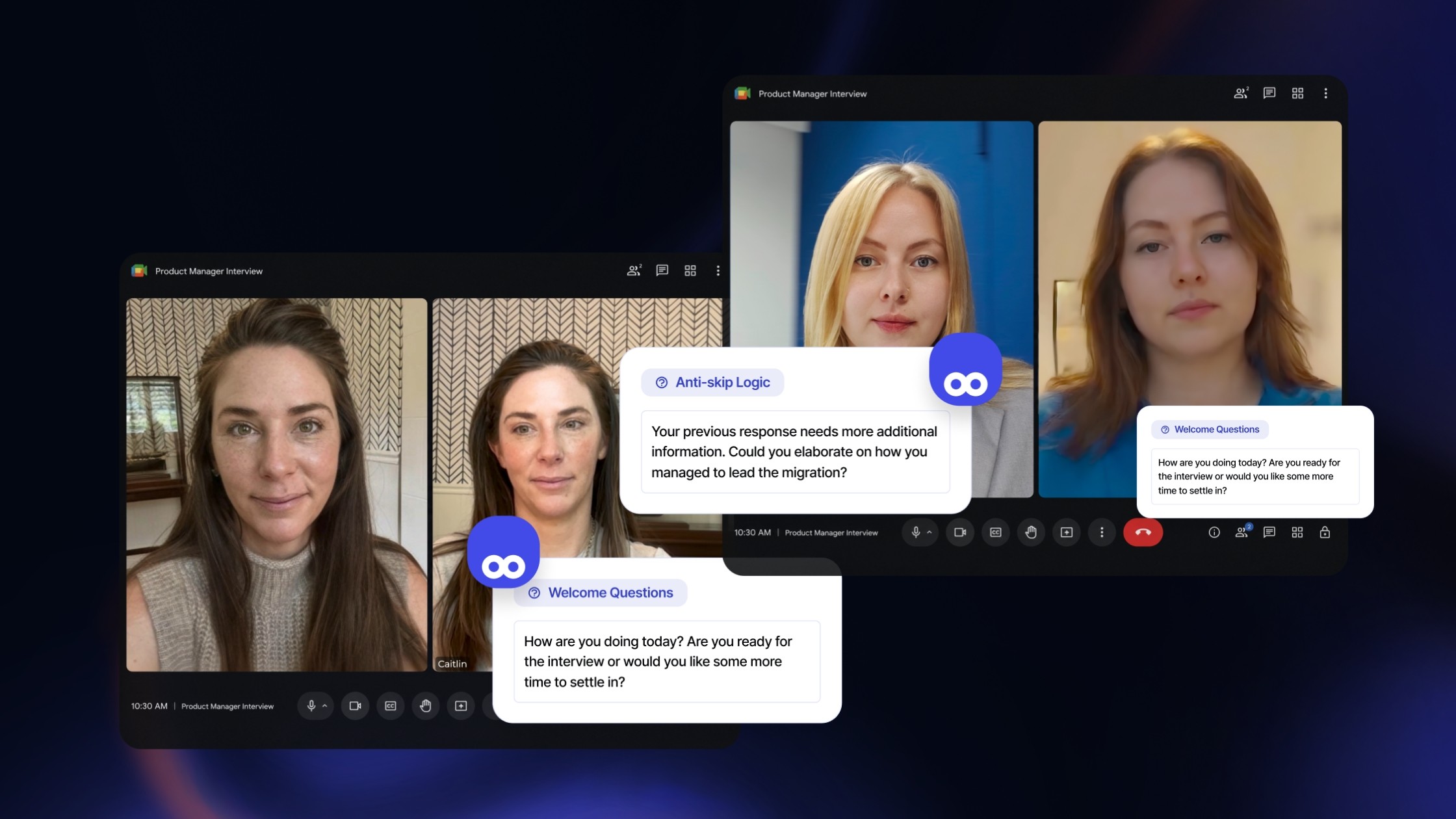
Conversational AI Interviews conduct structured, human-like first-round screening that candidates complete on their own schedule, eliminating the scheduling friction that stalls every manual pipeline.
Dynamic Follow-Up Probing goes beyond scripted question sets to assess the depth behind a candidate's answers, surfacing the signal that phone screens miss when a recruiter has eight more calls scheduled that afternoon.
Structured Evaluation produces consistent, competency-based assessments for every candidate across every role, creating the documentation and scoring standardization that enterprise governance now requires.
Recruiter Efficiency reduces repetitive early-stage screening workload so recruiters spend their time on candidates who have already demonstrated fit, not on the ninety percent who have not.
Faster Decision Cycles compress time-to-evaluate from three to four weeks to seven to ten days by removing scheduling dependencies and providing decision-ready candidate intelligence rather than raw data.
Enterprise Readiness means built-in governance, transparency, structured scoring rubrics, and human-in-the-loop controls that meet the compliance expectations of enterprise procurement.
From job post to qualified shortlist in 48 hours. Without a single phone call.
The Future of Hiring Is AI-Assisted and Human-Guided
The companies winning at hiring in 2026 are not the ones who replaced their recruiters with AI.
They are the ones who redesigned their evaluation workflows so recruiters can focus on judgment instead of operational overload.
The recruiter's irreplaceable contribution is not conducting screening calls. It is making calibrated decisions about human potential. Every hour a recruiter spends on scheduling, note-taking, and manual documentation is an hour not spent on what only a skilled human evaluator can do.
AI handles the infrastructure. Recruiters handle the judgment.
That is not a vision for some future state of recruiting. It is what the highest-performing talent acquisition organizations are already doing in 2026.
The question for every TA leader reading this is the same: is your current evaluation infrastructure built for this operating model, or is it slowing you down?